What is percept NIPT?
This simple blood test analyses DNA, comparing all 23 pairs of chromosomes to screen for conditions such as Down Syndrome
If you’ve ever wondered why some MRI scans are bulk billed while others aren’t, you’re not alone.
Many people find this confusing, especially when the cost of one person’s scan is completely covered by Medicare but someone else must pay an out-of-pocket fee.
The answer lies in how the Australian Government funds MRI services through Medicare, and it all comes down to strict eligibility criteria, regulation and fairness in service access.
In Australia, the government helps to cover cost of diagnostic medical imaging through the Medicare Benefits Schedule (MBS), by offering rebates for eligible scans. However, MRI is regulated differently to other types of scans and therefore not all MRI scans offer a Medicare rebate.
With consideration to the government’s health budget and the number of MRI machines operating in the country, MRI rebates are regulated by holding a ‘licence’ in order to offer a Medicare rebate. This government regulation means there are a limited number of machines throughout Australia that hold a ‘Medicare-license’ to ensure healthcare costs are managed and that services are distributed fairly across the country for patients.
As a radiology provider of MRI services, the government allows for each MRI machine to be either:
The licencing guidelines helps balance affordability, access to MRI services and quality across metropolitan and regional areas. Therefore, although an MRI machine may be fully licenced, it does not necessarily mean the scan will be bulk billed and funded entirely by Medicare.
Bulk billed MRI depends on:
Understanding these factors helps explain why fees for MRI scans vary between patients and MRI providers.
Only specific MRI scans listed on the MBS are eligible for a Medicare rebate. Even if a scan is performed on a fully licensed MRI machine, Medicare rebates only apply when specific MBS criteria is met. The criteria outline the medical reasons or conditions for which Medicare will offer funding for the scan.
For example, some MRI rebates apply only to certain age groups or when there is clinical evidence. The idea behind this is to ensure that scans are referred appropriately, helping patients who will benefit most while maintaining sustainable healthcare spending.
If a patient requiring an MRI scan falls outside the MBS criteria, it can still be performed, but it will not be able to be bulk billed. Thus, a fee will apply (even if the MRI machine is fully licensed). This is referred to as a ‘non-rebated MRI’.

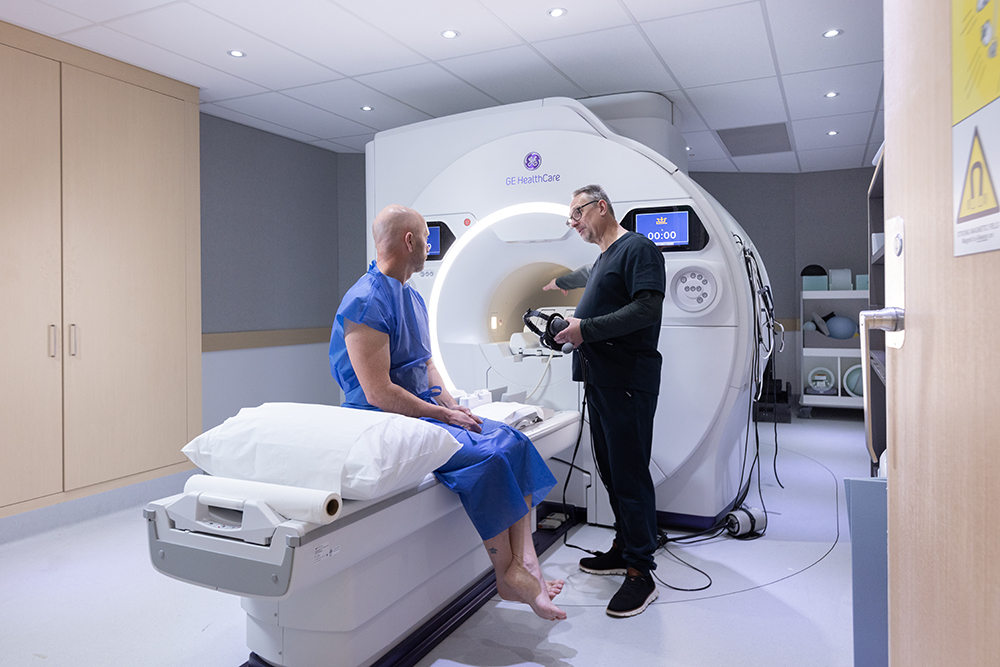
A referral is required by a registered medical practitioner to obtain an MRI scan.
Whilst the MRI scan must meet eligibility for a rebate to be offered and performed on a machine with a licence, Medicare also has boundaries around the practitioner referring the MRI.
Some MRI scans are only eligible for a rebate when referred by a specialist, while other types of scans are eligible for rebates with a GP referral (so long as MBS criteria is met). MRI can be referred by a Physiotherapist or Osteopath, however the scan won’t qualify under Medicare, and the patient will bear the full cost of the ‘non-rebated MRI’.
This is why practitioners need to ask patients detailed questions about symptoms and medical history before providing a referral. They have a Duty of Care to ensure the scan qualifies according to Medicare and follow the government regulations to protect their own medical indemnity.
All diagnostic imaging, including MRI, is regulated to ensure patient safety and a high-quality standard of care is met. The government assigns a ‘lifespan’ to radiology equipment to ensure it is fit for purpose and not used beyond its working lifespan.
Once an MRI machine reaches its ‘end of life’ time limit, any images taken on these machines cannot be bulk billed. This ensures radiology providers regularly replace or upgrade their equipment so that patients get the best quality imaging.
MRI machines cost radiology providers millions of dollars to purchase and run continuously. While upgrades also represent a significant investment for providers, they are part of our commitment to delivering world-class imaging to all patients.
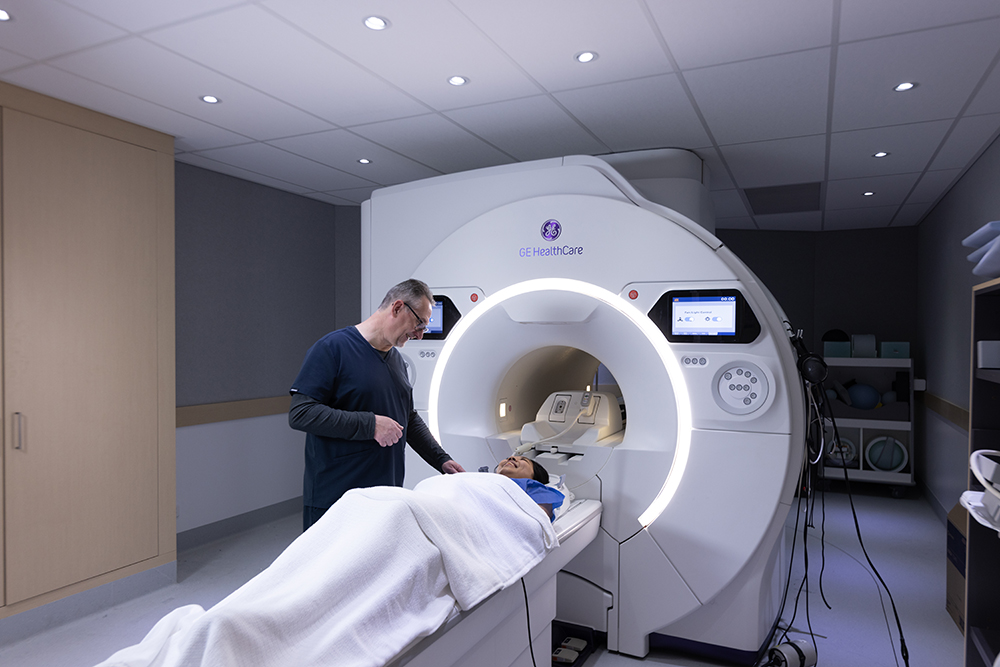
Our radiologists and staff will work closely with practitioners to ensure patients receive the right type of scan according to individual needs.
Our friendly administration team can answer any questions on eligibility criteria, as well as provide an estimated cost before booking an appointment. We accept all referrals, regardless of the template they’re printed on.
Always speak with a practitioner about symptoms or concerns so they can advise whether an MRI scan is appropriate.
Our team is ready to provide quality imaging and compassion every step of the way.
Bulk Billing or Medicare rebates depend on MBS eligibility and criteria, however we offer MRI services at the following locations:
* denotes licenced MRI machines

Lung Cancer AwarenessIn conjunction with Victorian Clinical Genetics Services (VCGS), we now offer percept NIPT (non-invasive prenatal testing) at our Sunbury and Melton clinics.
This simple blood test analyses DNA, comparing all 23 pairs of chromosomes to screen for conditions such as Down Syndrome
For more information, call us on 9744 5344 or contact your GP. Further information about the screening can be found at vcgs.org.au
*Please note: only the obstetric ultrasound scan performed in conjunction with NIPT is bulk billed, any other obstetric scans will incur an out-of-pocket fee.
I wish to access Lake Imaging Pty Ltd (Lake) Patient Archiving Communications System (PACS) and/or Radiology Information System (RIS) as described above.
Terms and Conditions